Meristem culture and clean seed potatoes
A potato crop starts not from seed but from pieces of last year's tubers. That makes it easy to plant and easy to keep true to type, and it also means that whatever diseases the parent carried can travel straight into the next field.
Why planting material matters
Growers call the tubers they plant seed potatoes, even though they are not seeds at all. Because each new plant is a clone of the tuber it grew from, a virus that has infected the parent plant is often carried along. Wikipedia's article on Potato virus Y describes it as one of the most important plant viruses affecting potato production. It notes that the virus is spread by aphids but may also remain dormant in seed potatoes, and that using the same line of potato to produce seed for several consecutive generations leads to a progressive increase in viral load and loss of crop. Its symptoms range from reduced yield to a necrotic ringspot disease that makes tubers unmarketable.
That progressive build-up is the core of the problem. A farmer who saves tubers from their own crop year after year is, without meaning to, also saving the viruses in them. Sooner or later yields fall, and the only lasting answer is to start again from planting material that is known to be clean.
What a meristem is
A meristem is a zone of actively dividing cells at the tip of a shoot or root, the part of the plant from which new growth comes. The cells there are small, packed closely and constantly dividing. Wikipedia's article on plant tissue culture notes that the growing ends of plants, such as the stem tip and the axillary bud tip, are the most commonly used explants because these tissues have high rates of cell division.
The very tip of the shoot has a second useful property: viruses often fail to reach it, or reach it only in small amounts, because the tissue is growing so fast and is not yet connected to the plant's vascular system in the usual way. A tiny piece cut from that tip can therefore give rise to a plant that is free of the virus carried by the rest of its parent.
From tip to clean stock
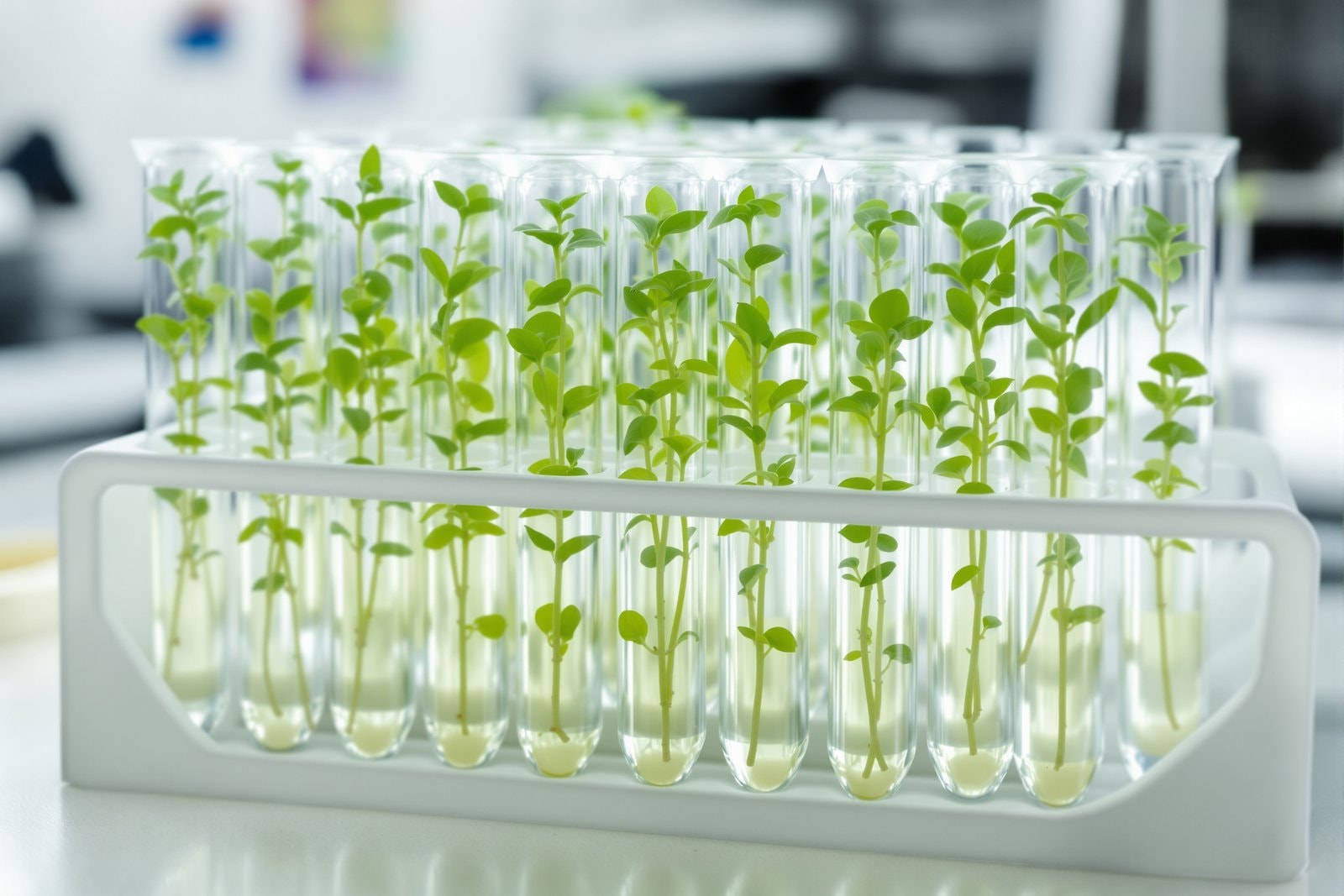
This is the technique the tissue culture article refers to when it notes that meristem tip culture can be used to produce clean plant material from virus-infected stock, naming potatoes among the crops where it is used. The process, described in general terms, runs as follows. A shoot tip is dissected from a sprouted tuber under a microscope and placed on a sterile nutrient medium. If it survives and grows, the resulting plantlet is tested for the viruses of concern. Plantlets that test clean become the nucleus of a new line.
Those few clean plants are then multiplied in culture, in the way described on the micropropagation page, until there are enough to move out of the laboratory. From there they are grown on in protected conditions, often in screened greenhouses that keep out the aphids that spread viruses, to produce small tubers. Only after further generations of multiplication in the field, usually under inspection, does the stock reach farmers as certified seed. At every step the aim is the same: to keep a clean start clean for as long as possible.
Keeping it clean
Clean stock does not stay clean by itself. Aphids arrive every season, and once plants are in open fields reinfection begins. The Wikipedia article on the virus notes that increases in infection in one national industry were attributed to several factors, among them less effective control of the insect vectors and the use of infected seed potatoes. Seed programmes therefore combine the laboratory step with field hygiene, testing and limits on how many generations a line may be multiplied before it is replaced from clean stock again.
Why it matters beyond potatoes
The same logic applies to many crops that are propagated from pieces of the plant rather than from true seed, among them sugarcane, garlic, bananas and many fruit and ornamental plants. Wherever a crop is cloned, disease can ride along, and meristem culture offers a way to break the chain. For potatoes, a staple crop grown in enormous quantities, the payoff of starting clean is especially large.
Studies in this area usually compare varieties, media and conditions to see which give the best survival and growth from very small explants, and then test the plants produced for the absence of virus. When reading them, it helps to ask how the plants were tested and how many were tested, since the value of the whole exercise rests on that check.